
Mulching and Erosion Control on Burned Land
October 13, 2026
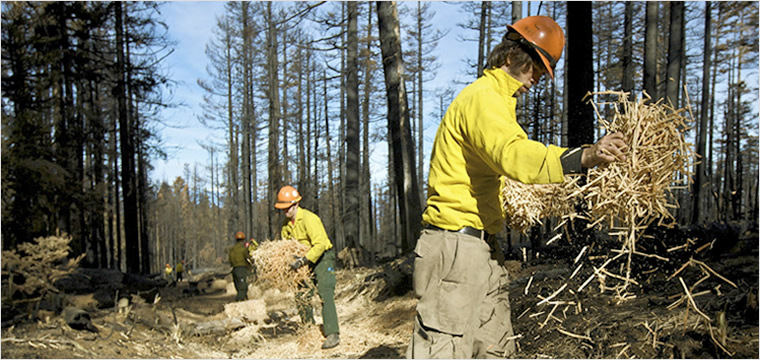
Fire removes the plants and litter that hold soil in place. Until vegetation returns, bare ground erodes quickly, and runoff carries soil and ash into streams, roads, and homes. Post-fire treatments aim to slow water and cover the soil.
Common treatments
- Mulching with certified weed-free straw or wood shreds covers soil and reduces the force of raindrops.
- Seeding with native or recommended species helps roots take hold. Timing matters, so check local guidance.
- Straw wattles and log erosion barriers slow water on slopes and trap sediment.
- Check dams and culvert clearing keep channels and drainage working.
Tips for landowners
- Act before the monsoon. Treatments work best when in place before heavy rain.
- Use certified weed-free materials so you do not introduce invasive plants.
- Work with experts. Your local conservation district, county extension office, or State Forestry can recommend methods suited to your slope and soil.
- Inspect after every storm. Repair gaps and clear debris from barriers and culverts.
- Keep livestock and vehicles off treated areas until plants are established.
Treatments reduce risk, but they cannot stop floods on severely burned slopes. Review our guide to post-wildfire flooding and stay alert to weather upstream.
The Post Fire Treatments section has detailed practices, and Who Can Help? lists agencies that may offer advice or support.