
Returning Home After Wildfire
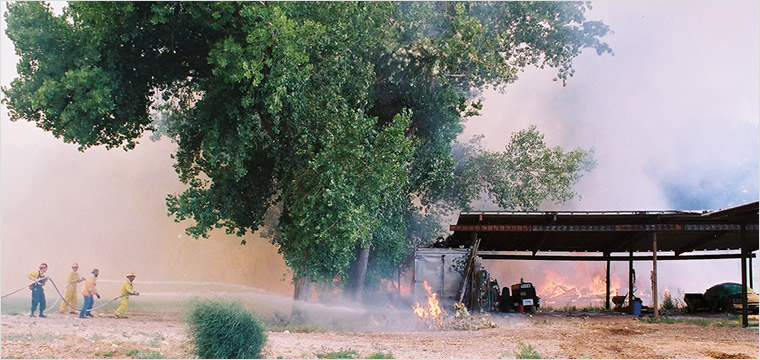
Re-entering your property after a wildfire requires patience and caution. Roads, utilities, and structures may be unsafe even when flames are out. Use this checklist after fire officials say it is safe to return, and adapt steps to directions from your county emergency manager or incident command team.
If you feel you are in danger at any time, call 911 or your local emergency number.
For broader safety topics, including flash floods and utilities, see the main Immediate Safety page.
Before you enter the property
- Confirm re-entry clearance. Wait until law enforcement, fire officials, or local emergency managers authorize access. Closed roads and standing evacuation orders still apply even if your home looks intact from a distance.
- Check weather and flood risk. Burned watersheds can produce fast runoff. Review floods following wildfire and monitor National Weather Service alerts before you travel.
- Bring basic supplies. Pack a battery-powered flashlight, N95 or P100 respirator, sturdy shoes, gloves, eye protection, drinking water, and a charged phone. Turn the flashlight on outside before entering in case gas is present.
- Travel with a buddy when possible. Tell someone outside the area where you are going and when you plan to check back in.
On-site steps after you arrive
- Walk the exterior first. Look for downed power lines, leaning trees, damaged propane tanks, and hot ash pits. Stay at least one tree length away from damaged trunks. Do not touch utility lines.
- Document damage before cleanup. Photograph structures, vehicles, fencing, and personal property for insurance. Contact your carrier before major debris removal. See financial tips for individuals for claim basics.
- Check utilities with professionals. If power is off, confirm the main breaker position before energizing. Have propane and heating oil systems inspected before use. Do not drink tap water until officials or the NMED Drinking Water Bureau says it is safe.
- Protect your lungs from ash and dust. Wet ash lightly to reduce dust, but avoid washing debris into storm drains or waterways. Wear a respirator while sweeping. Health guidance on smoke and ash is available from the New Mexico Department of Health.
- Keep a fire watch for 24 to 48 hours. Check attics, gutters, wood piles, and fence lines for sparks or hidden embers. Stay out of unstable buildings.
After the first visit
Register with your county emergency manager if a family assistance center is open. Ask about debris removal, water testing, and road repairs. If you own livestock or pets, review caring for pets and livestock after wildfire.
Communities coordinating neighborhood re-entry can use Mobilize Your Community for communication templates and volunteer safety practices. For printable reference material and alert tools, visit Additional Safety Resources.